
Press statement | Godongwana’s efficiency drive is gaining traction. Now he must prepare for changing health system needs
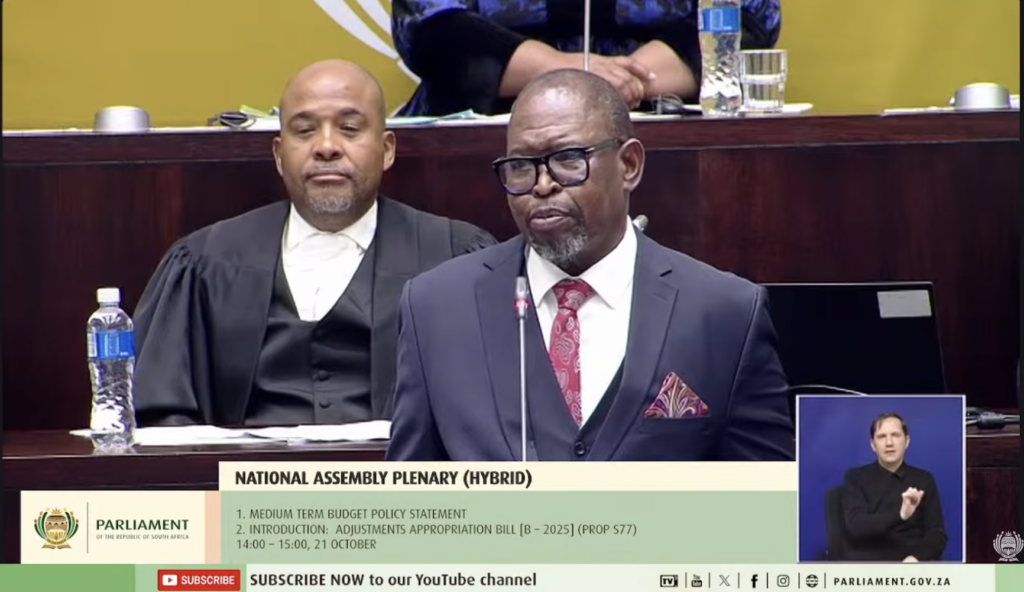
The Rural Health Advocacy Project welcomes Finance Minister Enoch Godongwana’s consistent focus on finding efficiencies in the system – but calls on him to ensure that better spending translates into improved access to healthcare so that inputs result in tangible improvements for patient outcomes.
Godongwana tabled the Medium-Term Budget Policy Statement earlier today, cautiously optimistic about the state of the country’s finances. He noted that debt was falling, ratings were up and the deficit was expected to narrow more than what was forecast earlier this year. But he warned that growth was still too weak.
To tackle this slow growth, Godongwana reiterated calls from his budget policy statement last year and earlier this year about removing and reducing inefficiencies in programmes, placing an emphasis on budgeting discipline, spending quality and better administration.
For health he added more than R500 million to the District Health Programme Grant to mitigate the impact of the withdrawal of PEPFAR support, added money to the provincial equitable share to help provinces mitigate spending pressures around education and health and allocated another R1.6 billion to nutrition for mothers and babies in the first 1000 days of life.
RHAP executive director Russell Rensburg applauded Godongwana’s consistent focus on the need for efficiencies, recognising the progress made, the focus on efficiencies the elimination of waste.
“The focus on efficiencies is important, but the government must also realise that these efficiencies must be done at the same time that it must fulfil its constitutional obligation of improving the path to healthcare,” said Rensburg.
“There are several technological advancements that are currently being introduced in the healthcare sector. This includes the roll out of lenacapavir, near point of care tests for TB as well as the TB vaccine. We need to be prepared to think about how these can be effectively implemented,” he added.
Rensburg noted that recent years have demonstrated that waste carries real costs. “Treasury is therefore right to identify inefficiencies and leadership gaps that undermine performance. But identifying inefficiency is not the same as removing it. Better management creates efficiency. Efficiency creates fiscal space.
The problem is that efficiency is not self-executing,” he added.
Rensburg also welcomed the additions to the District Health Programme Grant, noting that National Treasury had heeded civil society calls for improvements to the operation of the district health system as the foundation of service delivery.
“A stronger and more consolidated district funding platform could progressively become the mechanism through which government aligns funding with delivery, accountability and population health outcomes. Rather than operating primarily as a transfer mechanism, it could become the vehicle through which the health system addresses fragmentation and manages transition, he said.
“This matters because the next phase of health reform is not primarily about creating new programmes. It is about helping the system adapt to changing needs,” he added.
**ENDS**
For more information, contact:
Communications Officer: Aphelele Buqwana
084 667 8162 / ABuqwana@rhap.org.za
OR
Palesa Chidi
078 625 0511 / tchidi@rhap.org.za